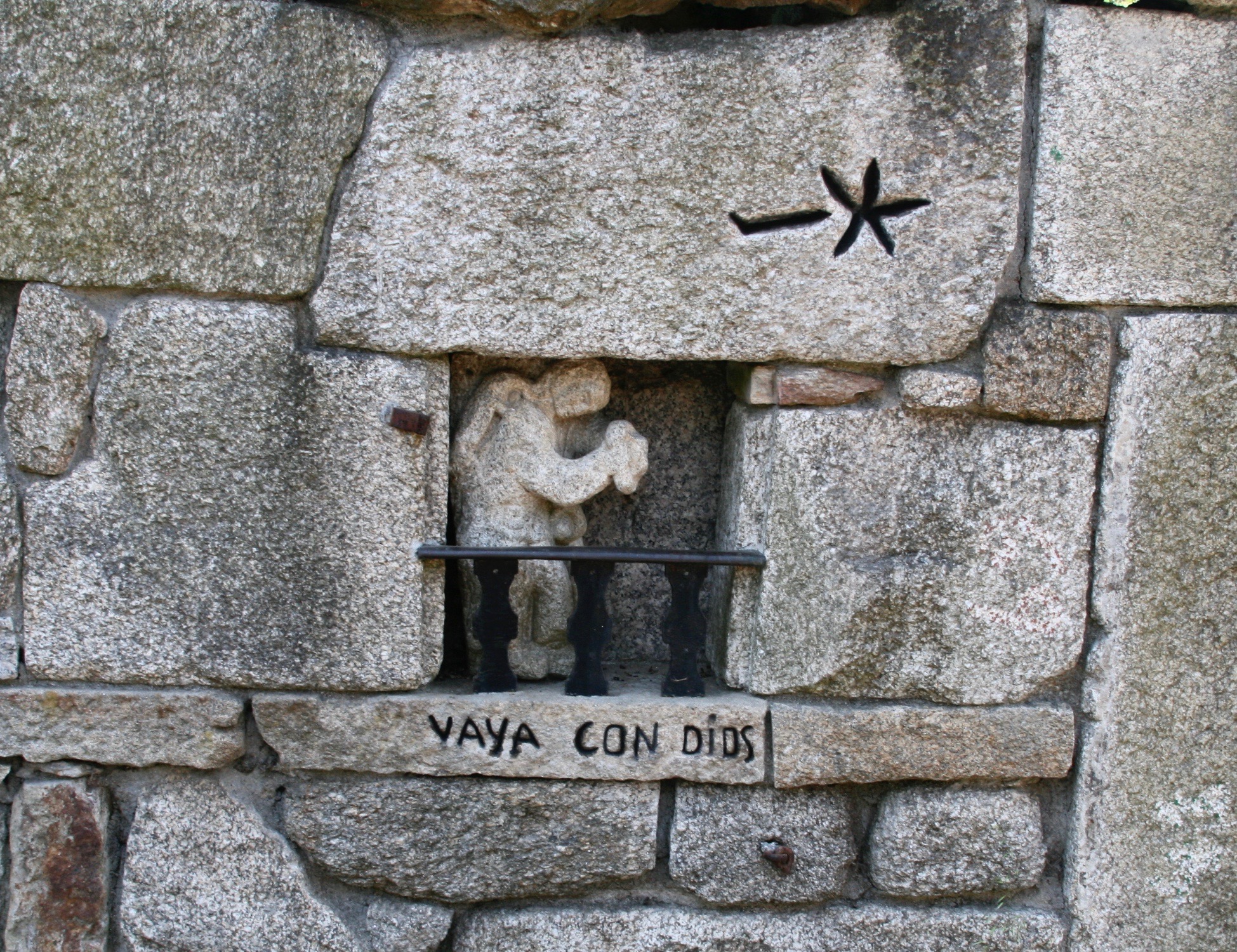
We Are Pilgrims

What matters most on your journey is how deeply you see, how attentively you hear, how richly the encounters are felt in your heart and soul.

                                                                      –Phil Cousineau in The Art of Pilgrimage

I’ll be offering a workshop on Pilgrimage at the Center for Spiritual Awakening in Allentown PA October 6.  Yes, preparation for any presentation is takes effort, energy and time.  But when I talk about Pilgrimage, I find myself energized and excited to be introducing this spiritual practice to those who may soon be taking their first pilgrimage.
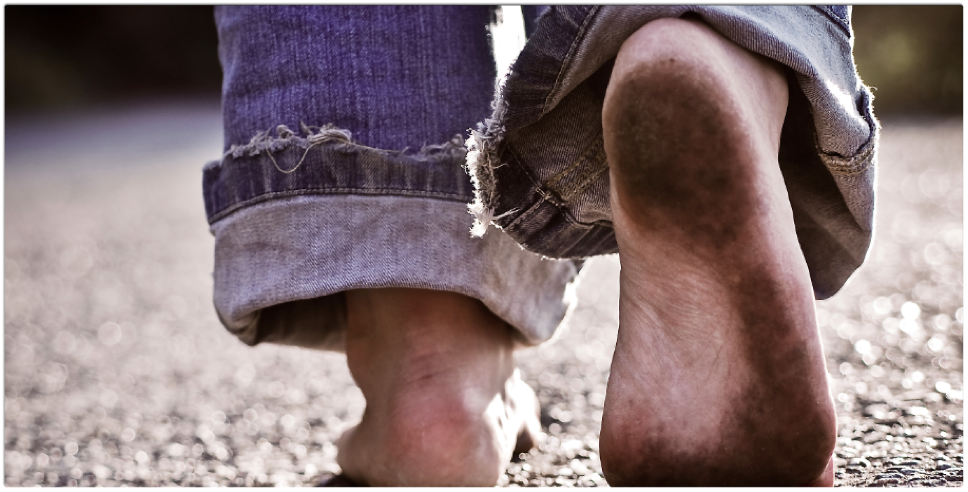
Dirty Feet

My first “formal” pilgrimage — a journey that I named pilgrimage before I embarked on it — was in 2008 on a portion of El Camino de Santiago with 14 youth and 3 other youth leaders.  I wasn’t a typical Camino pilgrim — or so I thought.  At 59 I had already had a (successful!) knee replacement, was in reasonably good physical condition, enjoyed being with teens (as a chaplain at an Episcopal girls preK-12 school, I’d had lots of exposure and loved it).  But I wondered and worried in the days preceding our flight.  Was I too old?  Would I be able to keep up?  Could I stay awake late enough into the night to keep track of the few who might try to sneak out for the freely available alcohol in “no set drinking age” Spain?

Nothing I worried about showed up on Pilgrimage (of course!).  Instead, Pilgrimage changed my life.  It has become a mission for me to share the blessings of pilgrimage with as many persons as I can: in my classes, in workshops, in conversations, in homilies.  Pilgrimage challenges the life we live so often on auto-pilot.  In a new place (whether a nearby trail, a journey to a historical site or one important to your family heritage, or a trip across the Pond to the Camino), old habits don’t fit.

We are challenged by new circumstances, difficulties to overcome, even the challenge of leaving behind your earbuds and iPhone or getting used to walking in silence.  Finding ourselves experiencing something different, we can choose to look at such challenges as torments — or chances to stretch ourselves and learn something.

We can try out a new way of seeing ourselves and the world we walk in — looking at everything that happens to us as having meaning — learning to see with the eyes of the heart as St. Benedict would say.  For instance, I learned on my pilgrimage that I could see everything that happened on my path as a metaphor for my life and as a possibility for enlightenment and growth.  The heightened awareness of being in a new place among people who spoke a different language and offered different food (octopus?  it’s really delicious!) made me aware of how back home I often preferred to stay in my comfortable routine and avoided intermingling with those whose accents or language were difficult to understand.  No more because of my pilgrimage — I am more open to difference — curious rather than shy or avoidant.

So much changed for me back home after my Pilgrimage.  I was more trusting that God was present in challenges and I was not living my life unsupported.  I was more willing to face challenges with the expectation that I would somehow grow through facing them.  I was less fearful of “what might happen” and more trusting that whatever might happen I was not alone.  I knew (and know) that I am truly loved by God.  I sense more keenly that only a thin veil divides our world from heaven.

There is so much more to say about Pilgrimage, but dinner is ready and I am ready for it.  So maybe some future blog will contain some of the rest of my Pilgrimage Truths. :^)
In the meantime, you might meditate on Kierkegaard’s admonition:

               Above all, do not lose your desire to walk . . .I have walked myself into                            my best thoughts.

A Consequential Life . . .

I recognized the key decisions of living a consequential life is:  Why am I here?  What will I do? How will I do it?  It’s a series of questions that we repeat all of our lives, especially during seasons of change.  When we find the answers, then we are assured that we are on the journey to live a consequential life. These three fundamental, but crucial questions are the map.

From: http://www.deeannturner.com/a-consequential-life-part-2/

One of the tributes I recently heard relating to John McCain, late senator from Arizona, was from Doug Ducey, current governor of Arizona.  Ducey described McCain as having lived a consequential life . . . That was a new phrase to me  and one that has resonated with me in the days since.  A consequential life . . . 

In beginning this blog entry, I googled what is a consequential life? . What came up was a bit disconcerting: consequential life cycle analysis (CLCA). CLCA is not about a life philosophy, it is about the impact on a variety of industrial outputs when an element of that manufacturing process is deleted.  ???

Of the 10 pages of google results that I reviewed, I found one reference each to Barbara Bush, Arthur Schlesinger, and Bernard Bailey as having lived a consequential life.  Not what I expected.  I was hoping for a variety of opinions on what living a consequential life might look like to various folks.  I discovered Dee Ann Turner’s essay on the questions one asks about one’s life path on that 10th page.

The idea of one’s life being consequential is akin to living one’s life in such a way to leave the world better than how you found it.  A consequential life is an intentional life, a life lived with questions and reflections on which path of many is consonant with one’s values and goals.

A definition of consequential offers synonyms like important, significant, major, momentous, weighty, memorable, far-reaching, serious.  Regardless of one’s political loyalties or religious practices, We can hardly disagree with the assessment of Barbara Bush, Arthur Schlesinger, John McCain having lived consequential lives (I don’t know Bernard Bailey’s story).  Most of us will not find ourselves in the public eye nor have opportunities to impact our world as Bush, Schlesinger, or McCain might have.  But in my mind, I can live my life with the intention of leaving my community and those with whom I interact (family, friends, acquaintances, everyday passersby) in a better place than when I arrived on this earth.  I do that through striving to glimpse the Light of God within each person I meet.  I desire to do no harm — but more than that, to do as much good as I can through reflecting on my relationships, my resources, my time, my energy.  And I know I will fail miserably quite often — but I will try anyway.

If you subscribe to the butterfly effect (Edward Lorenz: small changes can have large consequences), perhaps any encounter we have with others at any time — no matter how fleeting — can deliver unexpected consequences — can be consequential.   Yes, the briefest of encounters — how we treat a check-out clerk, whether we wave another car to go ahead of us at the 4-way stop, how we respond to a harried mom with a fussy child throwing a loud tantrum  — a frown?  or a quick “I’ve been there, I understand”?  Silly examples, perhaps, but consequential to someone’s day and also to mine.

I had to call an insurance customer service line this morning because something had triggered their system to reject my pharmacy bill.  The wait was long, the music on hold was too loud, I was annoyed and my tone of voice would have conveyed that if I hadn’t been thinking about this blog entry.  After a countdown (“you are the 4th person in line, please hold for the next available representative . . . you are the 3rd person in line, . . .”) that seemed interminable, a live voice asked how she could help me.  She couldn’t spell Moravian or Theological or Seminary and after asking me to spell them, she apologized for being “so dumb” — I told her she wasn’t dumb, just unfamiliar with the words.  She breathed a sigh and thanked me for being gracious.  I could tell that she was more relaxed and smiling — as was I because I had responded out of my better self.  We finished our business with good spirits and I felt heard and served well — no need to be irritable and pushy as I would have been had I not been thinking of the person on the other line.

If you are still reading this, I thank you.  To many folks such reflections on what is a consequential life may seem pollyanna and unimportant.  But it helped me be intentional with at least one small connection today with someone on the other end of a business call.  And I think it helped shape her day.

Jane+

Did you notice . . . ?

Kindness.hands

For each act of hatred that makes the news, a dozen of acts of goodness go unseen in our world.                           –Bishop Desmond Tutu

Each time I taught my graduate counseling class in Spiritual Formation, I would teach the spiritual practice of walking mindfully.   Students were already comfortable with sitting meditation and the breathwork that is part of mindfulness.  So after explaining that they would be going outside for 15 minutes to practice walking mindfully, I let them go to it. 

I watched them from a short distance. 

Some students walked at a very slow pace, taking their time to feel the solidity of the ground beneath them.  Some students would take off their shoes and wiggle their feet in the soft spring grass, then pick a blade, sniff it, and carry it with them as they walked.  Some students walked a couple of steps and then stopped beneath a tree or the clouded sky and gaze at what was in front of or above them for minutes at a time.  

After 15 minutes, I called them back to the classroom with a bell, and had them journal their experience.  Then, anyone who wanted to could share what this was like.

“I walk this path every day to this building, but I never noticed the dappling of shade and sun until today,” one student said.

“I heard birds calling,” another said.  “Are they always there?  I never noticed them before on campus.”

“I’m always in a rush to get to class and I realized today that I miss so much around me,” a young woman said in a choked voice. “What else am I missing?”

All of us are rushing somewhere, or caught by our screens, or thinking about what we need to do 10 minutes or an hour in the future.  What are we missing?

What small acts of kindness did we receive today that we rushed through and barely noticed?   A smile when we took our freshly brewed coffee from the clerk at the coffee shop?  A door held open by . . . was it a boy or a woman?  We didn’t notice.  

A maintenance person whistling while emptying the circular files in the computer room?  A girl with a My Little Pony backpack stooping down repeatedly to pick up pieces of paper trash and running to the trash can at the end of the parking lot to toss her balled up trash in it, yelling “Score!”  

Little pieces of goodness all around us.  I’m betting there are 10 . . . 15 . . . maybe more every day that I fail to notice — and fail to affirm.    Affirming, noticing, appreciating with words or gestures adds positive energy to those small acts of goodness and establishes a connection with the person offering goodness.   

In times like these when it seems easier to see the world filled with dark, diminishing, and destructive words and acts that tear down rather than build up, perhaps small acts of goodness that are barely noticeable can offer hope that love and light can win.

Resilience, Ambiguity . . . and Hope

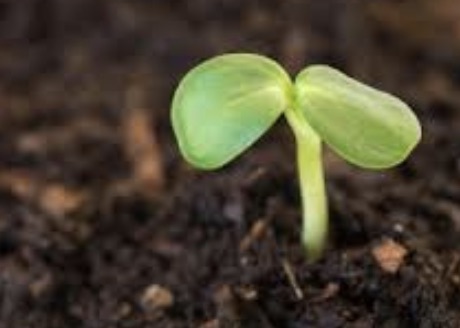
They tried to bury us; they didn’t know we were seeds.                                                     (Mexican proverb)                               

Maybe “they” didn’t know we were seeds.  Did we?  

To believe we can survive and grow when all seems lost requires hope.  Hope comes from experience we reflect upon . . . living through difficult events, challenges, losses, or woundings.  In the early moments of the difficult, we may feel unequal to it, perhaps overwhelmed, perhaps pretending or hoping that it is an illusion and will soon fade away.  But when we have experienced and faced a challenge and come through it — whatever scars we may carry — we can know for future events that feeling unequal or overwhelmed and having no idea how to survive the difficulty is just that — a feeling and not a reality. We can trust that step by step, somehow, some way we can move through the challenge and find a way to continue our journey.

I learn that lesson again and again as I live into my later years.  Each time life challenges me with another difficulty (small or large) I look back to difficulties I have faced in the past and find hope that carries me through the time of unknowing until I reach a place where the path becomes clearer.  I may have to let go of some things that have been important to me, that I thought I could not live without.  But I find out of those experiences of challenge has always come what I have called at various times nuggets of wisdom or pilgrimage truths.  

William Bridges, author of The Way of Transition has guided me in that process.  Bridges distills our human responses to challenges or changes into three internal transitional phases: Ending/Losing/ Letting Go, The Neutral Zone, and New Beginnings.

Events, difficulties, challenges happen to us. We usually have little control over such change events.  Transition, unlike external change events, is the psychological and internal response to external changes.  Transition theory begins with a jolt of change that disrupts our lives in some way. The change may be big enough to rock our foundations or it may be a seemingly small change that calls for just a slight shift.  We may feel capable of adjusting relatively quickly or we may need to allow ourselves time to catch our breath, cling to something solid, and feel our feelings.  Whatever the change, we need to take stock of what is left and what is gone, what we will need to take with us into the future and what we need to let go of.  This first phase is painful and difficult for most of us.  We may feel anger bubbling up unbidden, we may be irritable and prickly towards loved ones, our tears may well up without warning, our energy may flag, our optimism may be lost.  Go with these feelings, knowing they are normal.  They will not last forever.  Slowly and honestly, take stock, find what matters, let go of the rest. . .

The next phase of Transition according to Bridges is The Neutral Zone.  We have let go of the past, yet there is no new beginning — nothing that we can grab hold of.  We are in between and it feels scary.  It feels, too, like there is no way out of this in between time and we feel trapped and discouraged.  This Neutral Zone is always for me a place of confusion, a bit of panic (will there be a future?  how do I prepare if I don’t know for what?).  Yet, if I “trust the process” and let it unfold (perhaps in collaboration with others) and if I call on who I am and what I need and can give, the Neutral Zone is a place where energy stirs and creativity pokes through with new possibilities.  Such creative new beginnings are only possible if we trust that panic and confusion are part of this and that out of that state will emerge something new.  Is this totally Pollyanna?  Not at all.  In every ending is a new beginning that will grow and enrich us if we do not succumb to the siren song of quick fixes.  If we can allow ourselves to live in ambiguity, in not-knowing, our innate human drive for growth will eventually begin to offer up creative insight, and new possibilities.

The New Beginning emerges — always.  This is what one learns through experiences of change and inner psychological transition.  It may not be what we expected, but it will give us life.  This is the grounded hope that we can trust when we have lived through this transitional process in the past and consciously affirmed the process in reflection.   If we have been fortunate to not yet live through difficult change in  our lives, we can learn this process and perhaps tuck it away in the back of our awareness for retrieval when we need it.  

Many times after I have shared my story with someone, they have been surprised at my willingness to accompany others through their deep and tragic challenges while also maintaining an everyday optimism and cheer. They often say they could not have lived through the experiences I have described.  I know that we can live through almost anything with the grounded hope and conviction that something is to be learned from transition, and that new beginnings will always follow endings.

Jane

Grief

Grief

I need someone who believes that the sun will rise again, but who does not fear my darkness. . . Someone who can stand in thunder and watch the lightning and believe in a rainbow.    (Fr. Joe Mahoney)

Grief is one of the loneliest experiences one can have in our “I can handle this — I’m OK”, death-defying American culture.   Many of us run from the grief of a friend and even pretend that we haven’t noticed their pain. We try to distance from the grieving by making sense of it with one of many inanities: “She’s better off now and isn’t in pain”, or “Don’t cry.  He’s in heaven with God,” or “Your little girl is a flower in God’s garden now.”  Our corporate culture gives us 3 days of bereavement leave and assumes we should be all over our grief after that. 

Not at all!   Grief opens a trap door into deep darkness where we search desperately for the path that will return us to the life we knew — but we cannot find it.  And indeed there is no path back to the life we once knew.  That life is gone forever because of our loss.  We want our dinner table to have the same faces around it — but someone is missing.  We want our self-confidence back after the loss of a job, and yet when we bump into a former co-worker at the grocery store, we turn down another aisle hoping that she hasn’t seen us.  We feel an urgency to make a friend more comfortable by reassuring him that we are just fine even though our sad eyes betray the lie.

I need someone who believes that the sun will rise again, but who does not fear my darkness.

Yes, I need someone who can allow my tears to flow.  I need someone who doesn’t feel the tug to cheer me up.  I need someone who can just hold me safely and firmly in a hug that lasts long enough for me to relax into it and trust the closeness.

I need someone who has faced the darkness of loss in their own life, who knows the pain is deep and real, and yet who knows — at a cellular level — that however long the darkness of grief lasts for me or for anyone, healing will follow, and I will laugh again.  It is only someone who has felt the numbness and darkness of loss suck them  into the dark, bottomless pit. . . one who has waited, longed to find, yearned for the path that travels toward light again . . . only that one can truly bear witness with their presence alongside another’s grief that joy will come with the morning (Psalm 30:5).

. . .Someone who can stand in thunder and watch the lightning and believe in a rainbow.

The path toward the light and toward life again is not backward toward restoring what was.  The path toward the light is a path toward a life that is different in some way.  Grief changes us.   Loss (whatever has been lost) has taken something from us.  Over time as healing comes, we can learn something about our resilience, creativity, faith, hope, love.  Love will connect us forever with what we have lost., if we wish that.  Memories will remain.  But we will need to move forward with our lives, looking for a way to use the lessons of loss and survival in ways that may help others.  We can create meaningful action from the hard won struggle that heals.

I pray that when we heal from our own losses, we may become persons who, having heard the thunder and seen the lightning, still watch for the rainbows.  May we be the ones who can be present in another’s darkness without fear, knowing the sunrise is just over the horizon.

Jane


Staying Grounded in a World of Despair

IMG-2508 (1)

I am in need of peace and hope. No, I am not in despair, but there are times in this chaos of 2018 in America when it seems that all that was familiar is being dismantled or hatefully deconstructed.  And what I value in life: kindness, honesty, caring actions towards others, strength of purpose, wisdom . . . these things are being devalued, tossed away, seen as weak and worthless.

It is when I realize I am on the edge of the dark abyss that I go to my Poetry and Inspiration digital file.  When I taught, I always opened my class with 5-8 minutes of silent centering/meditation/ breathwork and then (to end the silence) read one of many poems that I had collected over the years and that fit the day’s class content.  One of them was Wendell Berry’s The Peace of Wild Things:

When despair grows in me
and I wake in the night at the least sound
in fear of what my life and my children’s lives may be,
I go and lie down where the wood drake
rests in his beauty on the water, and the great heron feeds.
I come into the peace of wild things
who do not tax their lives with forethought
of grief. I come into the presence of still water.
And I feel above me the day-blind stars
waiting for their light. For a time
I rest in the grace of the world, and am free.

Today is a day on the edge of the abyss, and so I go happily to walk in today’s rain shower and feel the cleansing and peace of just being alive.   I rest in the grace of the world and am free.  

Blessings and hope and peace.

Jane +

Future Selves on the Path

Last week I attended a workshop on being open to one’s Future Self . . . a wiser, more self- and other-compassionate part of yourself who has already lived through whatever challenges you are currently experiencing.  While it may sound a bit woo-woo to some people, it is a concept of time that is endorsed by quantum physics which suggests (in a very broad interpretation) that time is fluid and that the past, present, and future are present in various streams in our present life.

Future self

Experiencing the future self through guided imagery with a trained therapist can provide a supportive, creative way to be open to multiple ways of coping with, healing from, enduring suffering.  I have adapted this experience for my students in classes I have taught by asking them to close their eyes and imagine that somewhere off in the future, there is a part of them that has already lived through whatever they are presently going through.  That part of themselves has wisdom that they haven’t yet discovered, has worked through the quandaries that students may be baffled by or are worrying about, and has lived through what students are presently facing.  I then ask them to let themselves feel a connection to their future self at their heartspace — perhaps a thread or a light running from their hearts to the heart of the future self even if the future self is not visible to them.  I ask them to “see” and feel that connection (perhaps putting their hands over their heart).  After a minute or so, I have them open their eyes and begin to write a letter to themselves from their loving, compassionate, wise future self telling them what they may need to know.  Once written, they seal their letter and address it to themselves in a place they know they will receive it over the next year.  I collect the letters and keep them.  At an unplanned time during the next 12 months, I mail the letters.

I don’t ask them to respond to me when they receive the letters from their future selves.  Nonetheless, between one-third and one-half of the students let me know that what was contained in the letter had come at “just the right time” and contained exactly what they needed to hear.  “How did you know when I needed to hear this?” several students have asked.  I didn’t know.  Their future selves did.

I don’t read the letters, so I don’t know what they contain, but I also participate in writing from my future self and mail my letter at the same time as theirs.  My letters have invariably addressed stresses that I didn’t know I would be facing at the time I wrote and lifted up for me some strengths and insights that helped engage my compassion and insight in a new way.  Yes, the words and sentences were mine, but in imagining and “becoming” my future self as I wrote, I actually could feel the comfort of a companion who could lift me up (or walk me forward) on my life’s path as a more whole person.

Our future selves are always with us.  We can tap into their wisdom, their life experience, their compassion — because it is actually ours.  They are who we become with just a few more steps on the path.  What is your future self saying?

Jane

Airplane — 38 years ago

I just read a post on my Facebook stream that Airplane (the movie) was released 38 years ago.  What memories that brought back.  Bittersweet and yet not sad.

Thirty-eight years ago, my then husband Ken Williams and I had fled to the shore to spend a long weekend in Ocean City at a borrowed house belonging to friends who wanted to offer us a bit of comfort after a huge shock.  I had sat in a doctor’s office with Ken just 3 days before and heard what no one wants or expects to hear . . . a diagnosis of late stage cancer.  It was called non-Hodgkins lymphoma — a cancer that these days is serious but considered more of a chronic condition than a terminal one.  But in those days, there were far fewer effective treatments and the doc struggled to tell us that Ken might have 3 months to live and would need to begin treatment in the hospital immediately.

We bargained with the doc (and, I suppose, with fate) and asked for one week of reprieve.  We had been married just over one year, and were trying to get pregnant, but treatment (if Ken survived) would make him infertile.  The doc said one week would not make a difference, but  to be sure it wasn’t longer.

So, we ended up in Ocean City.  Our time together was not only to try (futilely, it turned out) to get pregnant, but also to savor our last few days together before entering the world of chemo, radiation, and hospitals.  It was time tinged with knowledge of what we were facing, but holding each other, not letting go of each other’s hands as we walked, trying to hide tears from each other — all this was important and, in a sense, offering whatever balm was possible at such times.

So the second night we were at Ocean City we walked the boardwalk, one of Ken’s favorite things.  We passed the lone theater which was advertising Airplane.  It had been overcast all day — that grey sky dark with ominous heavy curtains of clouds just waiting to drop their payload of rain.  As we passed the marquee, the sky opened and rain fell with ferocity.   We stood under the marquee, then I suggested maybe seeing this movie — I had not seen ads for it and had no idea what it was.  I just wanted a distraction.

What a wonderful serendipitous opportunity it was.  We sat in the theater, almost the only patrons, and laughted until tears came.  These were not the tears of sadness, though, but of unbridled laughter.  For 90 minutes, our fears and grief were lightened and less present as we watched the screen.

At the end of 5 days, we returned to our home in Mt. Pocono and Ken entered St. Luke’s Hospital in Bethlehem — a 50 minute ride from home and the closest cancer treatment center at the time.  But our time in Ocean City was marked by that movie — we found we could laugh and find joy even in the midst of tragedy and threat.  That experience has never been forgotten.  Thirty-eight years ago today . . . like it was yesterday.

Jane+

Bliss

I have loved teaching.  I taught in a graduate counseling program that was lodged in a progressive Christian seminary.  By progressive I mean that this seminary was one of the few I know of that is Christian in tradition and that is open (radically open, some would say) to those of a variety of spiritual paths (and no path as well).  The inclusiveness of this seminary is in large part due to two programs and degrees/certificates.  One is a masters degree program in clinical counseling (the one I taught in) that sought to integrate spiritual awareness and psychological counseling skills.  The second is a broad set of programs that offered certificates in spiritual direction and formative spirituality.  The work that we did in teaching, supervising, and mentoring students in both of these programs was sacred.  Students often are drawn to a seminary for study in theology, ministry, chaplaincy.  But few seminaries offer programs in spiritual formation (duh?  why not? but ’tis the truth).  And no one I know looks for a counseling degree leading to licensure in a theological seminary.  So it was always a struggle to get enough students  and our classes were small.

But what occurred in those cohorts was sacred, mystical, transformative.
We graduated Muslim students, Buddhist followers, a Hindu priest, and many flavors of Christian.  Some of our students had not been in church since childhood.  The programs, however, renewed a quest in our students and many returned to their spiritual roots or found other paths that nurtured them in more fulfilling ways.  Throughout the program, students began to change the lenses with which they saw mental illness or life challenges.  They began to see how depression, loss, joy, illness were not just diagnosable using the DSM5, but were also spiritual problems.  They began to see more deeply into patients/clients, and into themselves as well.  They began to attune to the emotions of their patients/clients, and use their own feelings as potential cues to what was happening inside the Other (what is called countertransference in psychodynamic therapy).

I had not expected to write about my teaching or the program I taught in — just to say that I loved seeing the changes in students and felt that in answering God’s call to this work that I was walking the path to which I had been called.

I am now beginning retirement and am starting to experience a blissful feeling of freedom.  For although I truly loved what I did, I am now realizing the burden I carried with me constantly.  .  .the burden of always knowing there was something I could be doing to stay on top of teaching, grading, mentoring.  I have let go of this burden, and it is an experience of feeling lighter, more confident that what comes next is something that I can handle or survive, that I can dwell in a place of delight in being present to experiences without having to pull away and check the to do list of class prep or reading.

I know this won’t last forever and that there will be blips and bunders, but for now . . . bliss it is!

The Journey Begins

IMG_2295

Thanks for joining me!

Good company in a journey makes the way seem shorter. — Izaak Walton

I am journeying on a new path — or perhaps it is a continuing path and I am just passing into new territory.  I like where I am on the path.  I feel time lengthening and broadening, and I can take the time to look around me, join others when I want, experience stretches of solitude when it suits, and dig into those tasks and experiences and practices that I had to set aside previously.  I am officially retired as of tomorrow.

I have loved the myriad of work positions I was fortunate enough to have throughout my life.  I was a journalist where I learned to write succinctly and with the who, what, where, when, why formula — something that in later academia I tried to unlearn!  I was a philosophy/social sciences major, a seminary student, a United Methodist clergyperson, a counselor and chaplain in an Episcopal girls school, an ordained Episcopal priest, a psychologist in private practice, the director of a spirituality center in an Episcopal parish, a spiritual director, and a professor and chairperson of a graduate counseling program that integrates spirituality and counseling skills.

Many of these positions were ones I held part-time and jointly, so the long list really is not a history of leaping from one position to another.   My deep call to vocation was and still is a pursuit of the ways one can integrate their spiritual practices and faith into a helping profession.  So now, in retirement, I will still be looking to walk a path that combines these two.

At present it seems that I will be living into a call to give workshops and presentations in various settings.  Already I have been asked to present at an Institute for Spirituality and Mental Health in the VA system, to present on complicated grief for professionals and laity, to offer a retreat for Moravian Bishops, and a workshop on pilgrimage at a local parish.   I also am continuing to offer spiritual direction to several directees and will keep a small (very limited) counseling practice out of my home office.

I don’t want to over-schedule myself.  Rather, these workshops and retreats are opportunities for me to teach and offer on topics I love and want to share.  I will say “no” if I feel stressed for time — my retirement pilgrimage path needs to have time for family and friend relationships that have been neglected during my working years.  I look forward to traveling to visit (Memphis, upstate New York, New Mexico) friends who have moved and to see the sights at each place.  And I hope that friends and family will come to our house and partake of its gardens and quiet spaces.

I intend to write twice a week as a practice.  If more needs to be written, I will add it.  Mostly this will be simple personal reflections on my path.  If you choose to share a part of your journey with me, I would be delighted — both in reading my reflections and perhaps adding a comment or brief reflection of your own.

On the path,

Jane +