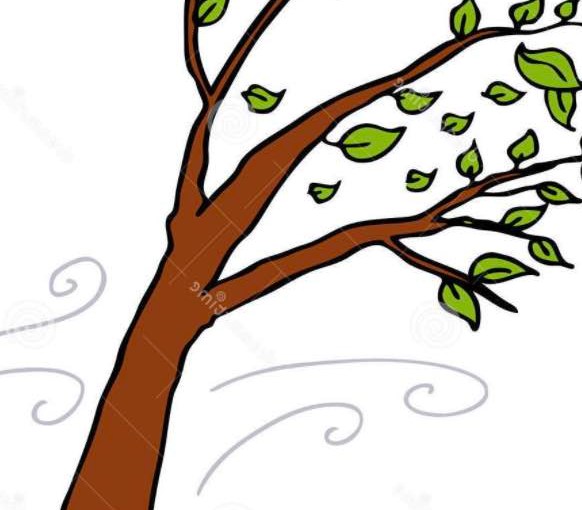
The wind last night, I am told, was sustained at 30 mph with gusts to over 50 mph. It seemed much stronger. It frightened me and I could not fall asleep until there were long pauses of calm. Then I would awaken again at the sound as the wind arose again like a locomotive bearing down on our small house.
The house is sturdy and it held firmly against the night’s fury — unlike a car in the wind. My sister and I sat in her car earlier during daylight, eating lunch together as we shared time and space . . . a luxury after the year of isolation with Covid restrictions and her immunocompromised status. But as we sat in the car we watched the sky become inky black and knew rain was to come. What surprised us, though, was the wind. It seemed to explode on us with a strength I had never seen. It blew the rain horizontal — I’ve seen that before — but blew so strongly that an older couple we saw crossing the parking lot in front of us could not take a step toward their car. Against the oncoming wind they could barely keep their footing except by grasping each other and leaning full weight into the blast.
The sound of such wind is what scares me. It is unearthly. Not quite a yell. Definitely not a moan. It is a steady fierce pushing energy that seems like it will never let up until it flattens whatever is in its way. As I listen to it in our bed in the darkeness, I am aware that I am holding my breath — or is the wind making it hard to breathe by literally stealing my breath away? The steady sound growls and grows. . .then changes to a slight whistle, then stillness until the next gust.
Wind is cleansing, blowing away the detritis of dead blossoms and winter’s dried, curled leaves covering the base of shrubs as protection from the cold. It is friend and housekeeper — but also an energy that will grow and blow and refuse to bend to the command to stop. When will it be still again?
I finally fall asleep. And when I awake to sun and light breeze, I breathe deeply of the earthy smell of spring . . . wondering why I fear a sound in the night . . .

 Pilgrimages and Paths