Elfin Magic

Elfin Magic

I had started my walk in a nearby park in a rather serious mood. My head down and engaged in thoughts triggered by a podcast playing in my ear, I didn’t notice the few others who were on the trail even though I only wear one earpod when I walk so I don’t miss birdsongs or the crunch crunch crunch of a fellow walker coming up behind me.

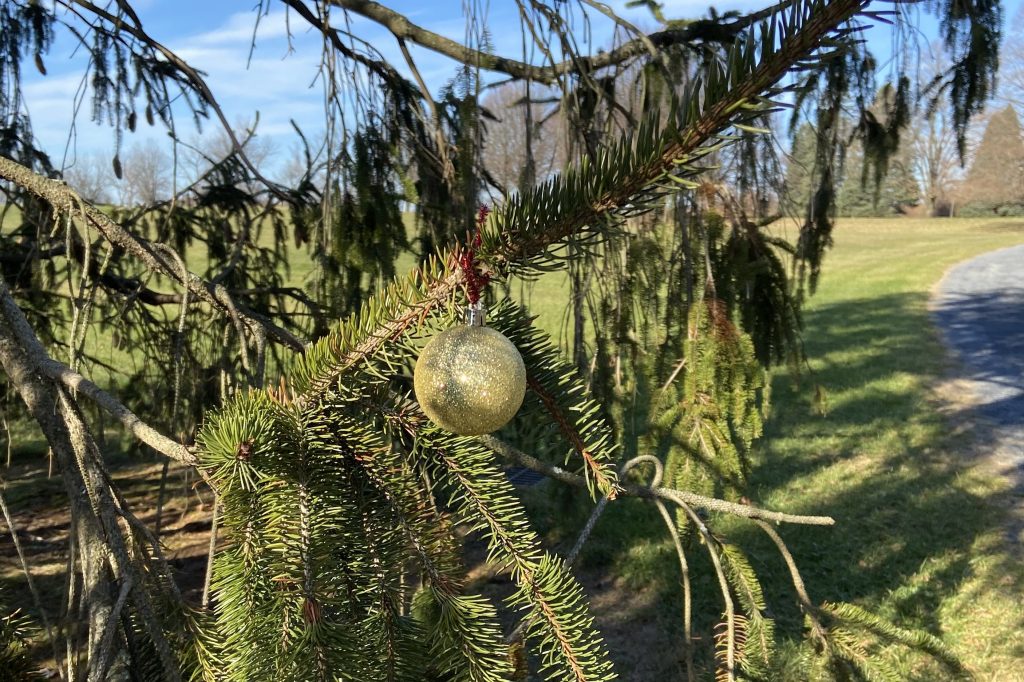
I was well into the two mile walk when I started to notice something odd with the trees along the path. At first I thought the gleaming little Christmas ball was the only one and only on that tree. Nope. When I noticed a third tree with a shiny ornament, I put the podcast on pause and the earpod in my pocket. There were more ornaments but only one per tree.

One on the next tree on my right. And the next one on my left. And the next. And the next. On some trees the ornament was hanging out in plain sight. On others there seemed to be no ornament. But when I looked more curiously every tree along my path had a ball hung somewhere within it. There were small round balls of red, white, green, silver, and even black. Some were not much bigger than a grape while others were the size of a navel orange.

I smiled then laughed out loud as each shiny ball reflecting sunlight caught my eye. Branches bare of leaves made identification something that will require waiting until spring, but no matter. I was not looking for leaves. Rather, I was looking for this winter “fruit” — these ornaments.

I had come to my walk in a familiar park, Louise Moore Park in Northampton County, Pennsylvania (just a few minutes drive from my house). The paths in the Park are neither fancy nor wild. They amble through fields. Some are mowed to ankle depth while others have been left wild for birds to nest and scavenge. Along some sections of the path are groves of 8 or 10 mature copper beeches, maples, oaks, and pines. I wondered who had taken the time to offer these gifts along the path. It wasn’t the rangers and it likely wasn’t a paid worker. The balls were not hung with panache or professionally placed. Some were tied to branches with unraveling yet colorful ribbon, some with sparkly twisted pipe cleaners, others hung on a colored metal hook that contrasted with the color of the Christmas ball it attached to the tree. Someone had anonymously hung the path with shiny bright objects that could not be missed and that made smiles emerge and childlike delight fill hearts that needed a bit of joy.

“Have you noticed the Christmas balls in the trees?” I asked an older couple holding hands.

“Oh yes, aren’t they wonderful,” the woman said. “We were just wondering how they came to be here. Who did this?”

I smiled as I said, “I think it is the elves who decorated our path.”

“Oh yes! Isn’t that something! Elves!” And she smiled as she and her husband nodded to each other.

Later, a jogger approached, head down, concentrating on the path ahead with headphones sealing out any other sound. I smiled and asked if she had noticed the decoration. She slowed slightly, took off her headphones and looked quizzically at me. I repeated my question.

“Oh, yes. They’re cheery aren’t they?” she said. Putting her headphones back on, she smiled and waved goodbye to me.

Yes, they are cheery. I needed “cheery” today. \Others may have needed it as well. And for this simple bit of good cheer I thank the Elves who took time to make this writer’s day brighter. It was a simple thing. Something that made a difference . . . at least to me. Thank you so very, very much. Now, I’m thinking about what small Elvish thing I can do to make tomorrow a day with good cheer and smiles. . . Suggestions invited below in comments — don’t be shy if you have an idea! And be an Elf!
Lush and Richly Delicious . . . Yet Sad

Fall’s Golden Colors

What makes the season of fall so lush and richly delicious — yet also so sad and melancholy?

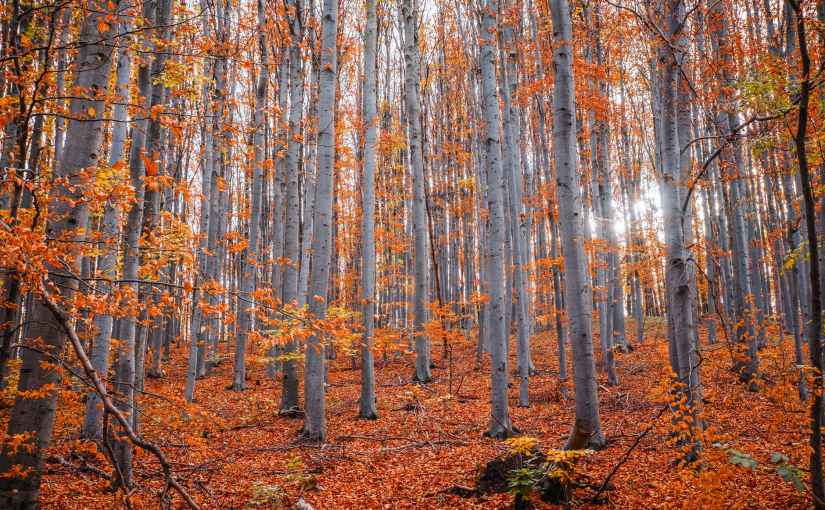
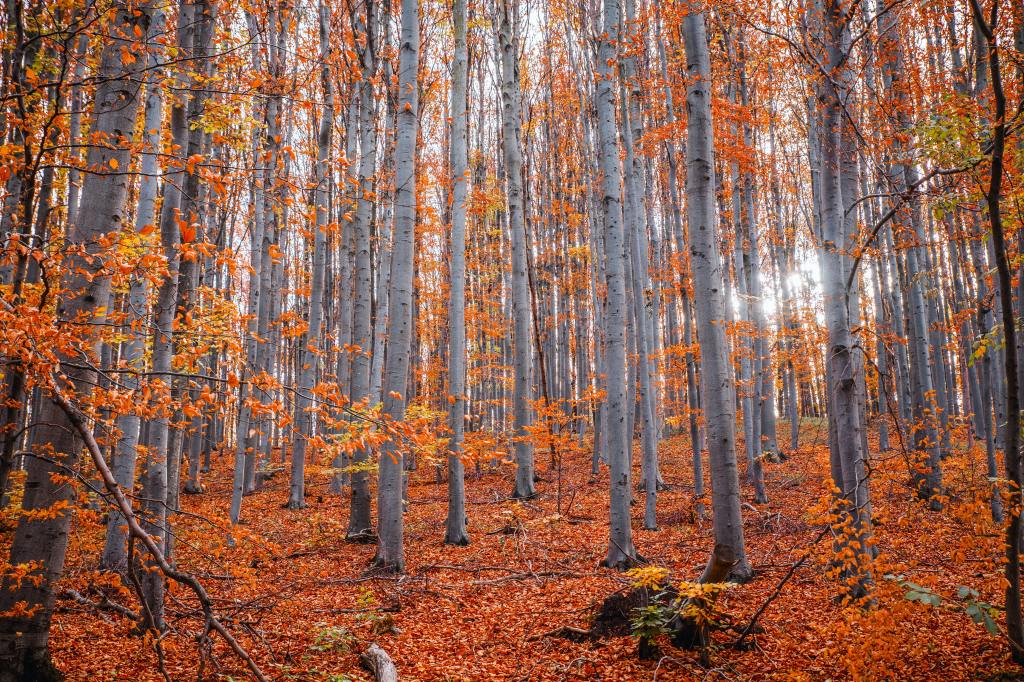
I am struggling with sadness this fall. I am loving the way the sunlight has shifted to a golden glaze on everything it touches. No more of summer’s glare. What is dying in my garden seems crowned with golden light that makes it glow despite curling edges and browning stalks.

I love the quality of the light and the rich colors of orange, yellow and red, and the way a single leaf can contain multiple colors of red, green, orange, purple. Yet as much as I want to enjoy this fall, I cannot seem to shake the sadness — and the depth of the sadness surprises me.

I am a person who is hopeful and rarely spends long periods of life in the doldrums. I don’t cry easily (at times I wish I did). Yet today in my therapist’s office I sat with tears trickling down my cheeks as I tried to explore this deep sadness that seems to have taken over me. When I came home and my husband said cheerily, “Well how was therapy?” I started to cry again and couldn’t find words to explain as he held me. I haven’t looked depressed or sad over these past weeks, but I have felt it . . . a blue-gray cloud that obscured even the lovely golden light I love so much.

Strangely, I am missing my Mom terribly even though she died 8 years ago. And I am missing my Dad who is still alive at 96 but who is not doing well. One thing I am missing is the confidence of their years of living that allowed them (especially my Dad) to reassure me when I came to him (even in adulthood) with dilemmas or hurts that I couldn’t resolve. He would listen compassionately and before we parted he would say, ” You will get through this. I know it is hard but it will be ok and you will figure it out.” I trusted that he was right because of his life experiences — and because he was my Dad.

Now I am the one who needs to offer such reassurances. Yet, I am struggling to believe in myself. I am carrying a lot of other people’s pain and struggles on my shoulders. I need to be my husband’s memory for appointments/ meds/bills. I need to be alert to and problem-solve my Dad’s care needs and medical issues. Lots more. It seems petty but I feel the responsibility (common to us first borns) to check on family and friends to be sure they are ok. Even if it is only on email or text, I try to write and reply to emails and FB posts as a way of checking in to see if others are ok. And what I crave and wish for is someone to check in on me.

I have been told that I don’t seem to need others. If true, I hate the aura that I must give off. I am not hiding my state, but I admit that It is often hard for me to talk about myself — in writing it is less difficult. I find listening — even listening deeply — to be easier than sharing what seems to me often less than the struggles or joys of others.

So I guess that shows why I am writing this. To be transparent. This fall I am sad. Very sad. I am missing the caring of my Mom and Dad, missing family and friends who used to check in with me, missing the planning for Thanksgiving and Christmas fun times together that no longer happen. I need to learn to trust that among family and friends I can open my heart and share not only the “good stuff” but also my sadness. I know it is true that family and friends would be there for me . . . I just need to take the risk and trust. And I need to trust that once again, as before, I will get through this. I will.

Gratitude

Grateful eyes look at each thing as if they had never seen it before and caress it as if they would never see it again. ~ Br. David Steindl-Rast

I write on the day after the latest school shooting. You may find it odd to be writing today on “gratitude.” I find no joy in the meaningless deaths of children at the hands of other children via deadly weapons that should be used only in war or self defense. Yet such tragedy makes me even more grateful for this day of life and the awareness of it as precious gift.

This recent health challenge magnifies my awareness of this moment, this day. I had slipped back into taking for granted this day and this life and fell into imagining that I had at least a decade (probably more like 2 decades if I’m honest) to enjoy the pleasures of not having deadlines or work projects that required major effort. My initial response on receiving the challenging news was anger that it was likely that I had been given a new “assignment” that would take away from my newly discovered pleasures (reading fiction, learning quilting, enjoying walks, etc.) and replace them with unwelcome “deadlines” and scheduled “must appear” events.

I still can feel angry — at fate and I suppose at God — if I allow myself that wasted energy. But more often now I notice with gratitude the small things that I might have previously passed over without much of a thought. I’m still not great at recording my gratitudes — a spiritual practice that I want to become more regular in. But I often acknowledge what I notice to myself or aloud with a “thank you, God”, or even just see how many people I can offer a grateful smile and “hello” to as I go through the grocery store or on my walk.

I am awed today at the prayers and love that others have offered me in this time. It usually comes via text or email. Sometimes a gift of homemade soup and a book left on my porch or a card with a hand written message delivered by the mailperson. And with each message or gift I return a prayer for that person and feel a deep gratitude that I (who have been a person who often has felt her “otherness” and awkwardness) am loved and held in prayer. I don’t feel deserving of such gifts and prayers — but I am aware that it is not about deserving but about accepting what comes (with gratitude) and not keeping it to myself.

And not keeping it to myself is a fruit of gratitude, I find. Gratitude creates an abundance of feelings . . . of safety, love, joy, astonishment, wonder, connection. The abundance is not to be held close nor stored but to be shared. So I share, perhaps in overly simple ways, but offering gratitude in writing or via a phone call, in my own prayers for others, in offering a smile to each person I see, in writing cards of gratitude for persons who have touched my life.

And I have a long, long list of people that will keep my pen busy for as long as I can write . . . I keep a rainy day file of notes or letters that I have received over a lifetime from persons who have taken time to let me know something that has touched them. They inspire me to respond to others with a “rainy day” message to let them know how their lives have touched mine.

Gratitude . . . I am grateful today for the chill in the air that drives birds to our feeder where Mr B (my kitty) and I watch with wonder. And I am grateful for my body . . . its strength, its resilience, and the ability it gives me to move through the world. Thank you, God, for all your gifts.

Five Lines . . .

I just learned about Cinquains . . . five lines of prose that begins with a single noun and the rest of the lines describing it. I’m not a poet. I’m not even a consistent writer on this blog. But writing Cinquains appeals to me because it is simple, accessible, and beautiful in its simplicity.

Here are the guidelines:

Line 1: A single noun . Line 2: Two adjectives describing the noun . Line 3: Three gerunds (action verbs ending in -ing) . Line 4: A sentence or phrase of just 4 words telling how you feel about the noun. Line 5: A synonym of line one.

Try one. They are fun, and sometimes surprisingly insightful. I am no poet, but here are some I’ve played with:

Time.
Moments.Unstoppable.
Filling. Measuring. Disappearing.
Faster and faster now.
Instantly.
Blue.
Cobalt.Sapphire.
Flying.Collapsing.Dying.
The color of 9/11.
Mourning.
Morning.
Fresh.Lightfilled.
Birthing.Rising.Beginning.
Always new, always surprising.
Hopeful.


Truth

The hardest part of writing is telling the truth.       –Sue Monk Kidd

I have not written lately, and perhaps I have lost you, my reader.  I have been painfully following the latest news commentary on the confirmation hearings for Supreme Court justice and the chaos that has ensued from the appearance of one and now two women who are accusing a potential Justice of sexual assault.  It has been disturbing and upsetting to me as it triggers memories I don’t want to remember.  

The memories are not new.  But I had buried them after each of them happened  — not even realizing what they were and not naming them sexual assault or sexual misconduct because I felt ashamed and responsible for not preventing them or knowing they might happen if I were in a certain situation.  As though I should have had a bit of God’s omnipotence to know what was about to happen.

The first I remember was when I was 16 and working a few hours a week as a cub reporter at our small town daily newspaper.  My editor assigned me to cover a Veterans Day Parade and I was to ride in a car with a 60-ish VFW member.  I climbed in the front seat, dressed in a modest Sunday dress and with my wooden pencil and lined notebook in hand.  As we drove the parade route, windows up because of the November chill, my “host” asked my name and grade in school and how our football team was doing.  I thought we were having a normal conversation and answered his questions.  In the same tone of voice, he said he had always wondered what color pubic hair a blonde and a red head had, did I know?  I could feel myself blush scarlet.  I felt stunned.  Was this ok? Is this how older men talk?  What should I do or say?  I stared at my lap and squiggled a doodle on the tablet.  “Well?” he said.

I had never been on a date.  I was very shy.  Writing was my outlet — I was much more comfortable with writing than with conversation.  I was a pastor’s daughter whose upbringing taught me that I was to make others comfortable and always try to understand things from other people’s point of view rather than challenge or disagree with them.  And I had learned those lessons well.

“You’re awful quiet over there,” he chided.  “And awful pretty.”  

I had never felt pretty.  I just wanted to get out of the car and run.  But “try to understand and don’t challenge him” were what came naturally at that point.  

“I don’t know the answer to your question, Sir,” I said without looking at him.  

He continued asking lewd questions.  I sat with my head down and tears coming and praying for the end of the ride.  We finally arrived at the VFW where the parade ended.  He invited me to go in to the bar with him.  Without looking at him, I opened the car door, jumped out, and ran and walked a block toward Teti’s pharmacy where there was a pay phone to call my Dad to pick me up as promised.

Until now, I never told this story except to my sister and husband.  And the awful thing is that it lay buried deeply in me until #MeToo burst on the scene.  Only then did I recognize it as the first of many boundary violations that have happened to me.  I was lucky, I know, that this was only words and not a rape attempt.  But the feeling of being trapped in that car, with a man whom I was supposed to trust as a benign helper in my cub reporter job while he enjoyed my discomfort with sexual innuendoes stays with me today.  It was the beginning of not trusting men, avoiding being alone with them, and feeling like a 16 year old when I have to be.   

Why is it so hard for so many men to understand the impact of the much more serious traumas that Dr. Ford and Ms. Ramirez are telling them?  Why must so many people minimize their stories as “just horsing around” — or worse yet, made up?  I know some of you who read this will figure that it is just “politics as usual.”  I want to know: what does it take to listen to someone with compassion and allow yourself to resonate with the feelings that come from such horrid events, however “insignificant” they may seem?

Jane+

Future Selves on the Path

Last week I attended a workshop on being open to one’s Future Self . . . a wiser, more self- and other-compassionate part of yourself who has already lived through whatever challenges you are currently experiencing.  While it may sound a bit woo-woo to some people, it is a concept of time that is endorsed by quantum physics which suggests (in a very broad interpretation) that time is fluid and that the past, present, and future are present in various streams in our present life.

Future self

Experiencing the future self through guided imagery with a trained therapist can provide a supportive, creative way to be open to multiple ways of coping with, healing from, enduring suffering.  I have adapted this experience for my students in classes I have taught by asking them to close their eyes and imagine that somewhere off in the future, there is a part of them that has already lived through whatever they are presently going through.  That part of themselves has wisdom that they haven’t yet discovered, has worked through the quandaries that students may be baffled by or are worrying about, and has lived through what students are presently facing.  I then ask them to let themselves feel a connection to their future self at their heartspace — perhaps a thread or a light running from their hearts to the heart of the future self even if the future self is not visible to them.  I ask them to “see” and feel that connection (perhaps putting their hands over their heart).  After a minute or so, I have them open their eyes and begin to write a letter to themselves from their loving, compassionate, wise future self telling them what they may need to know.  Once written, they seal their letter and address it to themselves in a place they know they will receive it over the next year.  I collect the letters and keep them.  At an unplanned time during the next 12 months, I mail the letters.

I don’t ask them to respond to me when they receive the letters from their future selves.  Nonetheless, between one-third and one-half of the students let me know that what was contained in the letter had come at “just the right time” and contained exactly what they needed to hear.  “How did you know when I needed to hear this?” several students have asked.  I didn’t know.  Their future selves did.

I don’t read the letters, so I don’t know what they contain, but I also participate in writing from my future self and mail my letter at the same time as theirs.  My letters have invariably addressed stresses that I didn’t know I would be facing at the time I wrote and lifted up for me some strengths and insights that helped engage my compassion and insight in a new way.  Yes, the words and sentences were mine, but in imagining and “becoming” my future self as I wrote, I actually could feel the comfort of a companion who could lift me up (or walk me forward) on my life’s path as a more whole person.

Our future selves are always with us.  We can tap into their wisdom, their life experience, their compassion — because it is actually ours.  They are who we become with just a few more steps on the path.  What is your future self saying?

Jane